
By SULEIMAN YAHYAH*
West Africa is no longer in a phase of energy potential. We are in a phase of energy system construction. For decades, the conversation about West Africa’s energy future has centred on what the region possesses: oil and gas reserves, significant renewable energy potential, growing electricity demand, a young and rapidly urbanising population, and strategic access to international markets. But resources alone do not create prosperity.
The question before us now is whether West Africa can build the market architecture capable of converting those resources into sustained economic value, deeper regional trade, greater investment and, most importantly, better lives for our people. And I want to suggest a clear answer: We can — but only if we think in systems, not projects. Individual refineries matter. Pipelines matter. Power plants matter. Transmission lines matter. Storage facilities matter. But their true economic value emerges when they become components of an integrated market. That is the opportunity before us.
THE US$3 TRILLION MARKET OPPORTUNITY
I propose a simple but ambitious framing: By 2035, West Africa should aim to generate at least US$3 trillion in cumulative energy market transaction value. Not as a fundraising target. Not as a valuation exercise. But as a measure of market depth, liquidity, integration and economic activity. A large energy market is not defined merely by the amount of oil, gas or electricity it produces. It is defined by how efficiently energy can move from where it is produced to where it is needed, how easily buyers and sellers can transact, how reliably infrastructure can be accessed, how effectively capital can be mobilised, and how confidently investors can operate across borders.
Today, we can already see the imbalance. Regional refined-product demand has grown from approximately 370,000 barrels per day in 2000 to nearly one million barrels per day today. Yet only a handful of countries have meaningful refining capacity. Similarly, only a relatively small proportion of electricity is traded across borders despite thousands of kilometres of interconnection infrastructure and the existence of regional power-market institutions. Put together, these realities tell one story: The physical system is ahead of the commercial system. We have infrastructure corridors, but insufficiently integrated markets. We have energy resources, but fragmented systems for monetising them. We have demand, but not enough mechanisms for efficiently matching supply with that demand across borders. That is the gap we must close. And closing it could unlock an entirely different economic trajectory for West Africa.
THE MARKET ARCHITECTURE: HUBS, NODES AND SPOKES
We should stop thinking of West Africa as a collection of fragmented national energy systems. We should begin thinking of it as a single integrated energy market with distributed infrastructure.
I propose a Hub–Node–Spoke model. Lagos can serve as an Atlantic liquidity and refining hub. Abidjan can function as a western commercial and logistics hub. Ghana can provide an important central balancing and storage node. Senegal can serve as a north-western gateway node. From these anchors, we build spokes into the wider region — connecting producers, refineries, storage facilities, power markets, industrial centres, ports and consumers. This is not theoretical. It reflects existing trade flows, infrastructure corridors, population centres and emerging refining and power assets. The Abidjan–Lagos corridor alone provides a natural backbone for deeper integration across some of the region’s most economically significant markets.
Our task is to convert geography into a functioning market system. That means making it easier for energy to cross borders, easier for capital to follow energy, easier for businesses to operate across jurisdictions, and easier for consumers and industries to access reliable and competitively priced energy. The objective is not to eliminate national energy systems; it is to make them interoperable.
REGULATORY INTEGRATION: THE WARF PASSPORT
No market of this scale can function effectively with fragmented regulation. But harmonisation does not mean uniformity; it means interoperability. I therefore propose a WARF Regulatory Passport System. Under such a framework, if a company, trader or infrastructure operator is licensed and compliant in one WARF jurisdiction, that certification should be progressively recognised across participating jurisdictions, subject to agreed standards and safeguards. This would be supported by common product specifications, shared data standards, model energy contracts, transparent infrastructure-access rules and a regional dispute-resolution framework.
The principle is simple: Regulate nationally. Transact regionally. This approach would reduce duplication, shorten transaction times, improve regulatory certainty and lower the cost of doing business across borders. It would also send an important signal to international investors. A fragmented regulatory environment increases risk. An interoperable regulatory environment creates scale. And scale is precisely what West Africa needs if it is to compete successfully for global energy capital.
SETTLEMENT, CAPITAL AND THE US$3 BILLION FACILITY
Physical integration, however, is not enough. We must also solve the question of how value moves. Energy markets depend on payments, credit, liquidity, guarantees, trade finance and risk management. If an energy transaction can cross a border in hours but the associated payment takes days, requires multiple intermediaries and exposes participants to unnecessary currency and settlement risks, then the market remains inefficient. West Africa already has important foundations. ECOWAS is advancing monetary convergence towards the ECO, the region’s proposed single currency. The Pan-African Payment and Settlement System, PAPSS, is providing an important continental payment and settlement rail. So we should not reinvent the system. We should connect to what already exists. I propose a West African energy market liquidity and infrastructure facility of approximately US$3 billion equivalent, structured initially with a Naira anchor but designed from inception to be PAPSS-settled, multi-currency in operation and compatible with an eventual ECO transition. The purpose is not currency dominance; it is transaction efficiency. Buyers, sellers, traders, utilities and infrastructure developers across West Africa should not have to route energy payments unnecessarily through external financial centres or face avoidable friction simply to participate in regional trade. We should build a system in which African energy trades can increasingly be cleared in Africa, settled in Africa and scaled in Africa.
This facility could also help to address one of the region’s most persistent challenges: the shortage of affordable, appropriately structured capital for energy infrastructure and cross-border trade. If we want regional energy integration, we need regional financial architecture capable of supporting it.
This was the principal reason we supported the African Petroleum Producers Organization in the creation of the Africa Energy Bank (AEB) through the development of the Establishment Agreement, Charter and Headquarters Agreement as well as fundraising initiatives across its member states in 2022.
Thus, when the Federal Republic of Nigeria mandated us — RHG Advisory — to lead the AEB headquarters bidding process, we accepted the invitation and appointment, rolled up our sleeves, and put our finest team and best foot forward to prepare the winning bid. Happily, Abuja, Nigeria, won the highly competitive bid and is now hosting the headquarters of the $5billion bank; it won by a wide margin ahead of Algeria, Ghana, Benin, South Africa and Ivory Coast who fought very fairly for the hosting right and privilege.
TALENT: WASF AND ATEM AS MARKET INFRASTRUCTURE
Markets do not run on infrastructure alone; they run on people. We must therefore treat WASF and ATEM not simply as training programmes but as market infrastructure. West Africa needs a new generation of regulators, commodity traders, energy financiers, benchmark specialists, infrastructure engineers, market operators, data scientists and risk analysts who understand the region’s energy systems and can operate confidently within an integrated market.
Training cannot happen at the margins of market development; it must happen alongside it. We need professionals who understand not only how to build a refinery, pipeline, power plant or transmission line, but also how to structure the commercial agreements that make those assets bankable. We need people who understand pricing, hedging, risk allocation, settlement, infrastructure access, data and regional regulation. And they must be trained inside the system they are building — not outside it. This is how we ensure that the market is not only built in Africa but run by Africa.
ENERGY POVERTY: THE REAL PERFORMANCE METRIC
But there is an even more important test. A US$3 trillion energy market that does not reduce energy poverty is not a success. It is imbalance. Our ambition must therefore be measured not only in transaction value, barrels, megawatts or investment dollars, but in the outcomes experienced by households and businesses. We should measure access, affordability, reliability, clean cooking, and productive energy use. Because energy is not simply a commodity; it is the foundation of industrialisation. It powers agriculture. It enables SMEs to grow. It supports digital economies. It improves healthcare and education. And it determines, in very practical ways, the quality of life available to millions of African households. Every pipeline, refinery, inter-connector, power plant or storage facility must therefore answer one fundamental question: Does it increase productive energy access for people and businesses? If the answer is no, then we should question whether we are creating development or merely creating infrastructure. The ultimate purpose of an integrated energy market is not the market itself; it is the economic transformation that the market makes possible.
BUILD WHILE WE HARMONISE
Let me close with what I believe is the most important principle. We do not have the luxury of sequential reform. We cannot wait for every regulation to be perfect before building infrastructure. We cannot wait for every infrastructure project to be completed before developing the market. And we cannot wait for the market to mature before investing in the people who will operate it. We must design while building, finance while regulating, train while trading, and integrate while expanding. The world will not wait for West Africa to resolve every internal coordination challenge. The global energy system is already moving. Capital is already shifting. Supply chains are already being restructured. New refining capacity is changing regional trade patterns. Renewable technologies are changing the economics of electricity. Gas markets are evolving. And competition for energy investment is intensifying. So the question is not whether West Africa will eventually integrate; the question is whether we will integrate fast enough to shape our own market outcomes.
A MARKET THAT BELONGS TO THE REGION
Distinguished colleagues, we are not here to manage fragmentation; we are here to end it. We are not here to optimise small systems operating in isolation; we are here to build a large one. A West African energy market with liquidity. With common standards. With interoperable regulation. With efficient settlement. With world-class infrastructure. With skilled African professionals. And with the ambition to reach US$3 trillion in cumulative transaction value by 2035. This is not simply an energy-sector ambition; it is an economic-development ambition. A deeper energy market can support manufacturing. It can strengthen agriculture. It can expand trade. It can create new financial markets. It can improve the competitiveness of African businesses. And it can give West Africa a stronger voice in the global energy system.
The opportunity is clear. The resources are available. The infrastructure is emerging. The payment systems are developing. The institutions are forming. The talent can be built. What remains is execution. And execution requires a different mindset. We must move from projects to systems. From national silos to regional markets. From resources to value chains. From infrastructure to infrastructure-plus-commerce. And from fragmented opportunity to integrated scale. If we do this, West Africa will not simply become a larger consumer of energy; it can become one of the world’s most important integrated energy markets — a market capable of mobilising capital, supporting industrialisation, creating jobs, reducing energy poverty and retaining a greater share of the value generated by its own resources. That is the opportunity before us. And that is the responsibility of our generation. Let us build the market. Let us build the institutions. Let us build the infrastructure. Let us build the talent. And, above all, let us build a West African energy system that converts the region’s extraordinary resources into extraordinary opportunity for its people.
The time for potential is over. The time for construction is now. Let us begin.
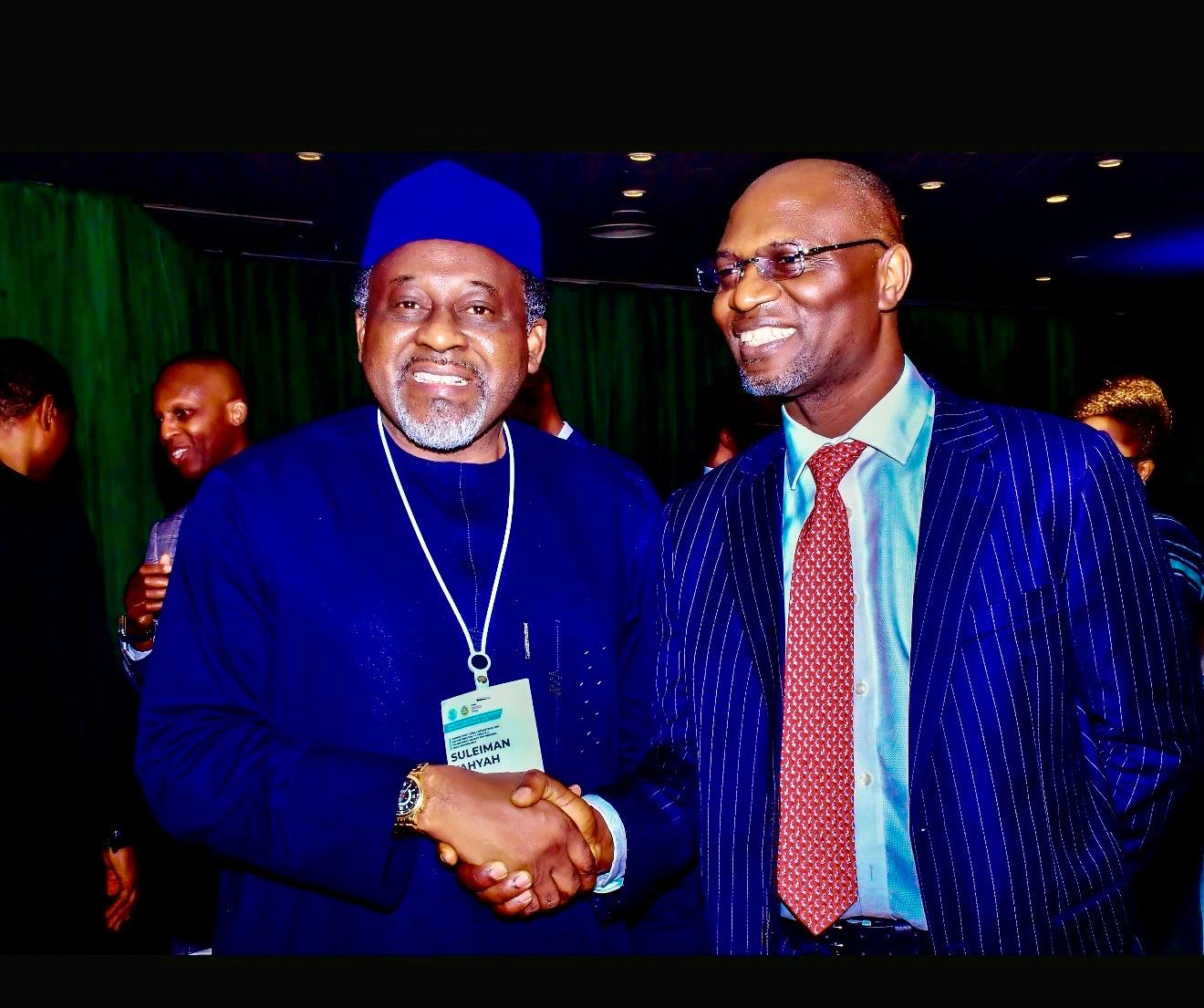
*Mallam Yahyah, OON, founder of RHG Advisory Limited and WARF/S&P Global Conference [pictured left], presented this address at the West Africa Oil and Gas Forum held August 11–12, 2026, in Abuja, Nigeria.