
By OBINNA MICHAEL*
60 YEARS AGO — September 18, 1966, was the day the streets of the Northern Region turned red with innocent blood. Over a million people fled to the Eastern Region to escape the pogrom. And that was why Biafra was born eight months later.
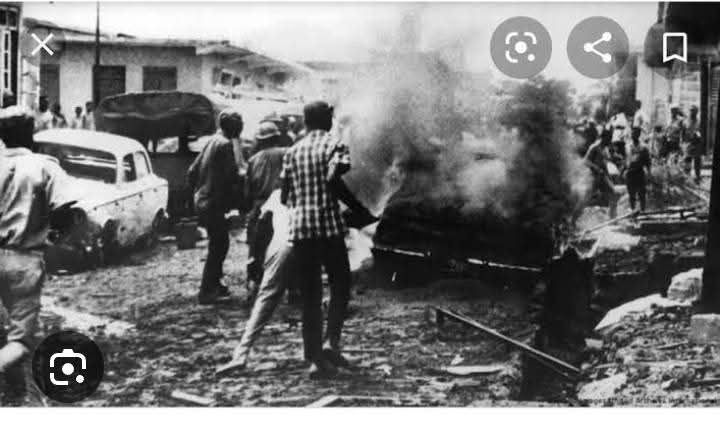
On this day, September 18, 1966, a new wave of horror was unleashed across Northern Nigeria. From September 18 to 29, 1966, coordinated pogroms against ndi Igbo erupted throughout the federation. It was not a riot. It was a systematic extermination.
In just those 11 days, more than 20,000 people of Eastern Region descent were slaughtered. Men, women, children, pregnant mothers, traders, students, soldiers — they were killed only because they were Igbo or looked like Igbo.
Homes were burnt, shops looted, and bodies littered the streets from Kano to Kaduna, from Jos to Zaria.
This was the second and deadliest pogrom and exodus. Over one million Igbo and other Easterners abandoned everything they had built over decades and fled back to the Eastern Region with nothing but the clothes on their backs. On foot, on lorries, on trains filled with corpses. Port Harcourt, Asaba, Enugu, Onitsha and Aba became refugee camps overnight.
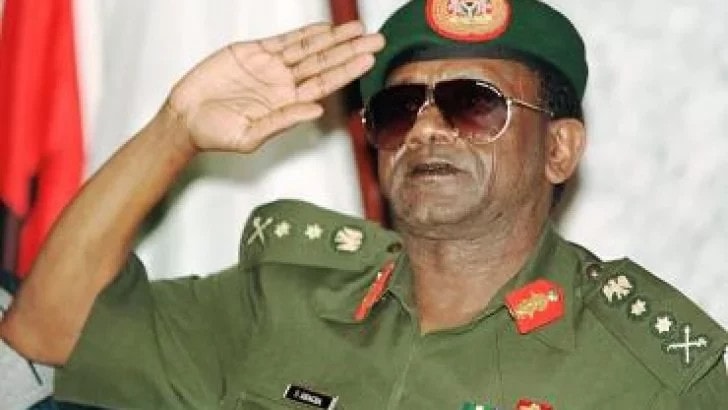
This September massacre came just weeks after the July 29, 1966, counter-coup that killed Gen. Johnson Thomas Umunnakwe Aguiyi-Ironsi, Nigeria’s first military head of state. It proved to our fathers that Nigeria had no place for us. It was this week of blood that convinced Col. Chukwuemeka Odumegwu Ojukwu and the Eastern Consultative Assembly that we needed our own safety, our own sovereignty, if to avoid annihilation. That decision gave birth to Biafra on May 30, 1967.
They thought killing us would silence us. Instead, it awakened a nation.
Today we remember not to hate, but to ensure it never happens again. A people who forget their history are condemned to repeat it.
Tell me one reason why we will ever forget Nigeria. September 1966 is a month we remember. We forgive but we do not forget.
*Comrade Obinna Michael is a writer, human right activist, historian, political & social philosopher.