
By Marty Ogonna and Rex Agba*
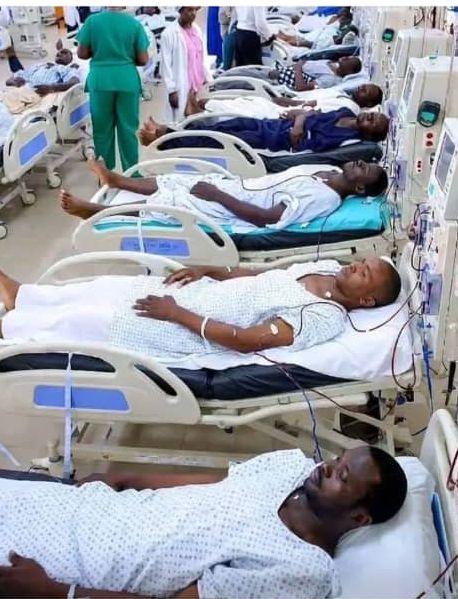
Ever visited a dialysis centre in Nigeria? In recent years, we’ve seen crowds comprising patients with kidney problems, but they’re not elderly people — most are below age 30.
In the past, things were different: patients with kidney issues and consequently placed on dialysis were often elderly people.
Energy drinks?
Unidentified “experts” on social media have blamed the new trend on “energy drinks”. Young people seeking to “perform” in their bedroom or hotel room with wives or girlfriends are familiar with such drinks. Among the popular brands are “Fearless Energy”, “Bullet Energy”, “Power Horse”, “Supa Komando”, “Predator Energy”, “Climax Energy”, “Monster Energy”, “Red Bull”, “Zagg Energy Malt”, “Tiger”, “Cintron”, “Maca Plus”, “Eviron”, “Black Stallion”, “Reaktor” and “Carabao”.
To protect their health, young people should avoid “energy drinks”, the advice goes. But are they really responsible for the rise in rates of kidney failure in the country? Are there other contributors to new health hazards in the world today?Other authorities have different perspectives on the growing cases of kidney and liver failures.
Farce or fact?
Let me state that I have never taken a sip of any brand of energy drink. My candid reaction below is based on antecedents.
As a laboratory assistant, recruited solely to assist in a World Bank research, to ascertain the different levels of cyanide in the available varieties of cassava (Manihot spp.) worldwide, at the Biochemistry department of the University of Nigeria, Nsukka, UNN, in 1977, I noticed that both the lecturer in charge of the research grant (who later became a vice chancellor of the University of Benin) and the assistant chief technologist smoked cigarettes. I mustered up courage to ask the lecturer why he smoked something that is dangerous to health. He finished the cigar he was having and, after looking seriously at me, referred me to experimental (not desk) researches on cigarettes and health, including of pregnant women. I perused those works keenly and what I discovered was baffling: There was no significant difference in lifespan between non-smokers of cigarettes and smokers at 0.05 significant level. Then, I asked the question as to why all the noise that cigarette smoking is dangerous to health.
The answer is that non-smokers don’t feel comfortable with the smell. The second unstated reason, and a more important one, was that cigarette and cigar money was fueling communism in South America — stifle their source of fund and the spread of communism would reduce.
Let us ask some relevant questions:
1. Who benefits from the ban of energy drinks?(Those competing with them for the same market)
2. Does excessive intake of alcohol affect only the kidney or both the kidney and the liver? (It affects both)
3. How come that only the kidney is affected in the literature? (Very questionable; only to be answered by experimental research and not allusion)
4. Who volunteered themselves to ascertain the addition of components of these energy drinks in question to the tissues of kidneys, and what were the empirically determined results? (We’re not told)
5. What do the brands of energy drinks produced from foreign lands have that the local ones lack, which make the imported one dangerous? (We’re not informed)
6. Who benefits from the ban on energy drinks? (Their competitors in the alcoholic and non-alcoholic industry, the producers of aphrodisiacs)
7. Why target the youths only? (They are more sexually active and prone to be ill-behaved under intoxication, an appeal that can work in the favour of competitors)
8. What was the response of competitors? (To address beer as “triple filtered” as if what are filtered off are not proteinous yeast and energy-giving, unfermented carbohydrates. Worse still, to repackage spirit in sachets and small bottles in place of “ebo-5”)
9. Are there other intakes that are highly injurious to the health of the kidneys? (Yes, preservatives in processed foods like biscuits, non-alcoholic beverages to deter fungi and bacteria, and unfavourable side-effects of drugs, especially antimalarials and antibiotics)
The recent revelation that sunflower oil and soy oil are superior to palm oil based on cholesterol content, have been found to be a falsified alteration of Oxford University research findings to favour the market value of sunflower oil and soy oil from the Eastern Europe. It has just come to the limelight with their very limited supply from the protracted Russia-Ukraine war. This tells us the extent people can go in de-marketing a product.
We need more clarity to justify the thesis that most of the youth who are on dialysis are victims of consuming energy drinks.
As a caveat, go slow on energy drinks, or even soft drinks with their diabetes-related stories.
Poisoned Earth
Everyone living in today’s world is at risk of having kidney or liver failure anytime. Those of us who look healthy owe our “good health” to God’s grace.
We now live on a poisoned Earth. All manner of vehicles pollute the environment with their poisonous fuel. Trees and forests are gone, the Ozone layer depleted, leading to climate change.
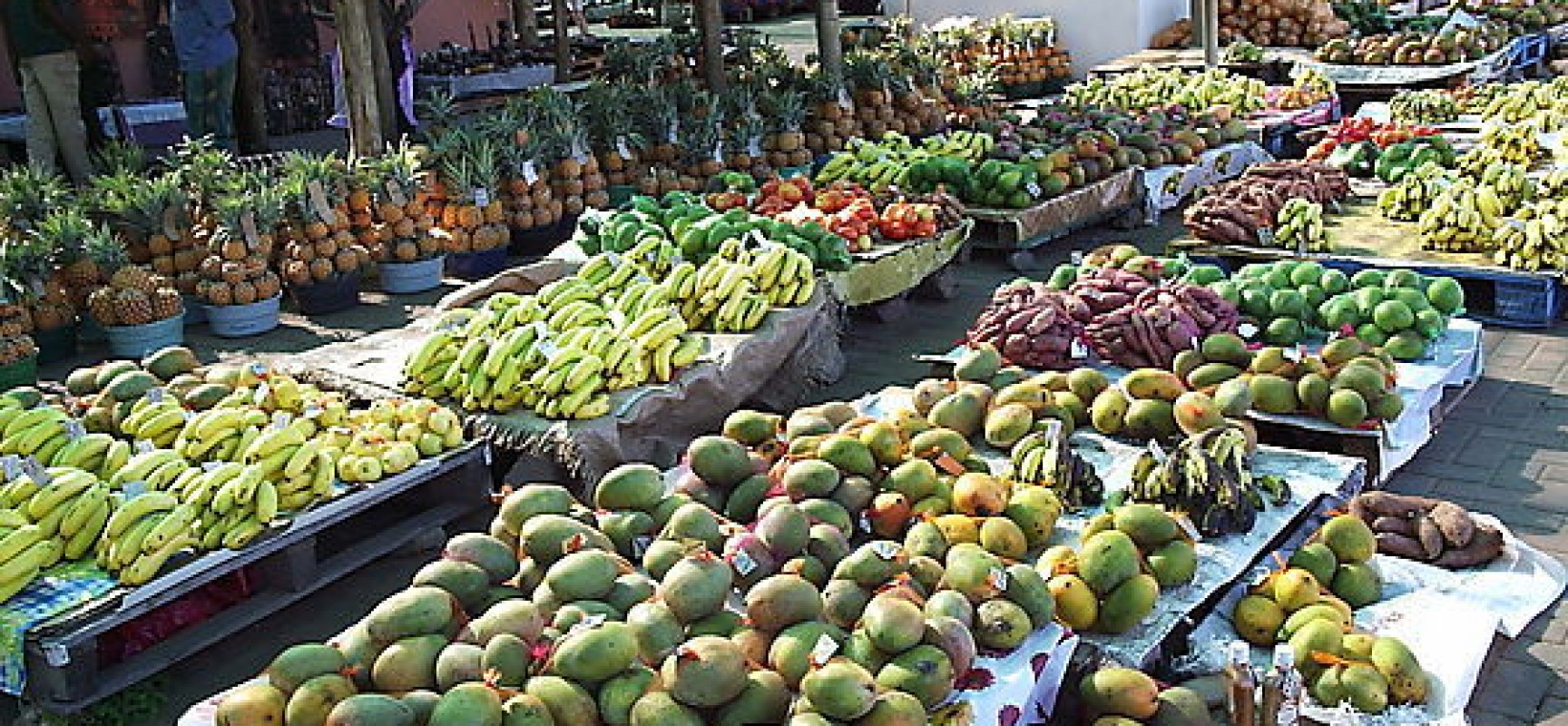
Pesticides and herbicides are sprayed on gardens and farmlands to kill pests, yet we eat the poisoned crops ourselves. Fruits are preserved with poisons, as are food items such as beans, bambara nuts, pepper, agbugbu, and maize.
When was the last time you saw, or heard the sounds of, crickets (ebzu)? Sorry, fertilisers have since chased them away.
All canned or processed foods are poisonous. So are iced fish, beer, stout, malt, Coke, red or white “wines” — every edible thing found in stores, markets or superstores. Palm oil and honey are adulterated, as is palm wine.
There’s no more pure water for drinking. Fake medicines are everywhere, and many are poisonous.
The sources of poisons we eat and inhale, especially in Nigeria, are inexhaustible.
Sometime in 2023, a friend and I discussed these things extensively. I’ve been wondering if he succumbed to one or more of these poisons in 2024.
#
*Ogonna is a biochemist, and Agba is a feature writer.